We Proudly Service: Charlotte, North Carolina
Elevator Refinishing & Renovations in Charlotte, North Carolina
Location Details
Location Details
Elevator Refinishing in Charlotte, NC
Most properties get stuck between two bad options when elevator interiors start to look tired: do nothing and let the space drag down the building, or spend $25,000–$45,000 per cab on a full replacement. Elevator Refresh exists in the middle of that gap. We give Charlotte owners and operators a way to keep elevators looking clean, modern, and on-brand while preserving cash flow and stretching renovation budgets instead of forcing premature capital projects.
We work throughout Uptown Charlotte and South End, and we’re often called when property teams want a polished look that fits modern interiors—whether you manage a building near the Bank of America Corporate Center, host guests around the Spectrum Center, or operate high-traffic buildings across the city.
Who we help
Hotels, multifamily and apartment communities, office buildings, healthcare facilities, senior living, universities, and mixed-use properties use cab refinishing to keep interiors looking sharp in the places people notice most.
What we refinish
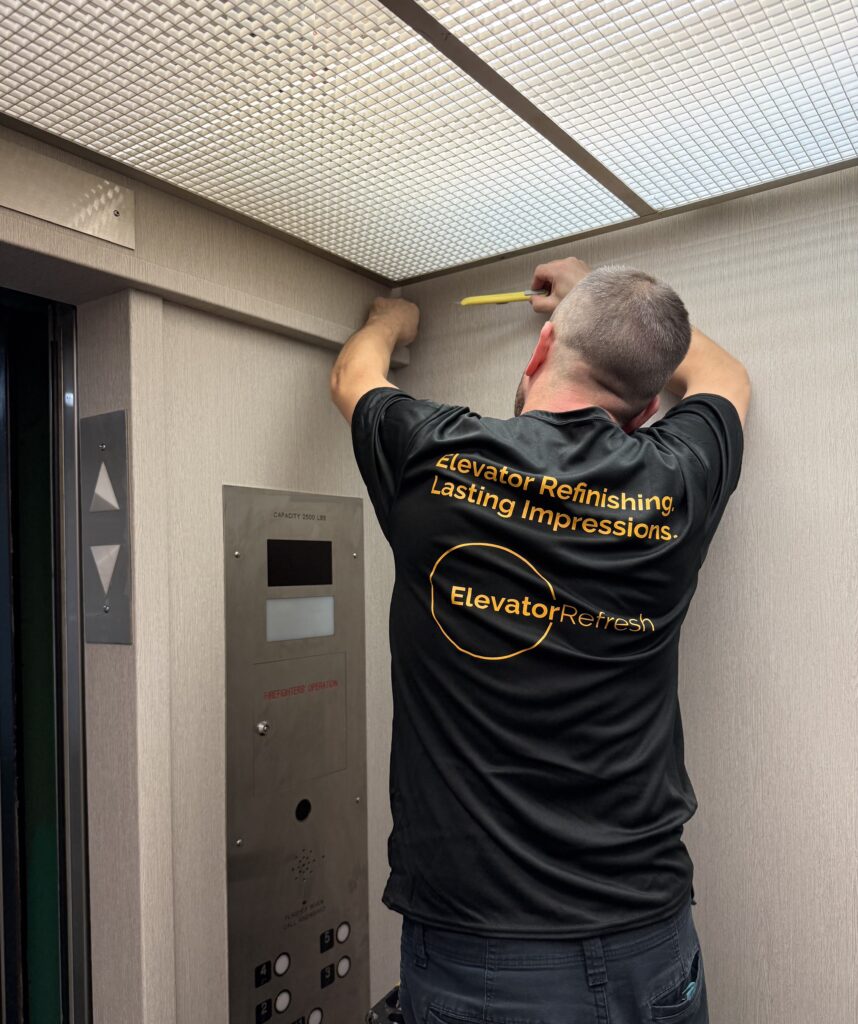
Common upgrades include cab wall panels, doors, returns, frames, reveals, and surrounding trim so the cab reads cohesive instead of patched together.
Charlotte projects, the practical way
In neighborhoods like NoDa, Plaza Midwood, Ballantyne, and University City, we’re usually brought in to refresh elevator interiors in a way that fits an active building schedule. Our approach is built for real-world properties: clear scope, straightforward finish options, and coordination with your team.
If you’re specifically exploring elevator refinishing for a Charlotte property, we can help you map out a finish package that matches your lobby updates, corridor palette, or brand standards.
We also serve surrounding areas like Matthews, Huntersville, Pineville, Concord, Gastonia, and Fort Mill—so regional portfolios can keep a consistent look across multiple buildings.
How projects typically go
1) Quick review. Share photos, cab dimensions if you have them, and your target look. We’ll flag what’s a good fit for resurfacing and what may need a different approach.
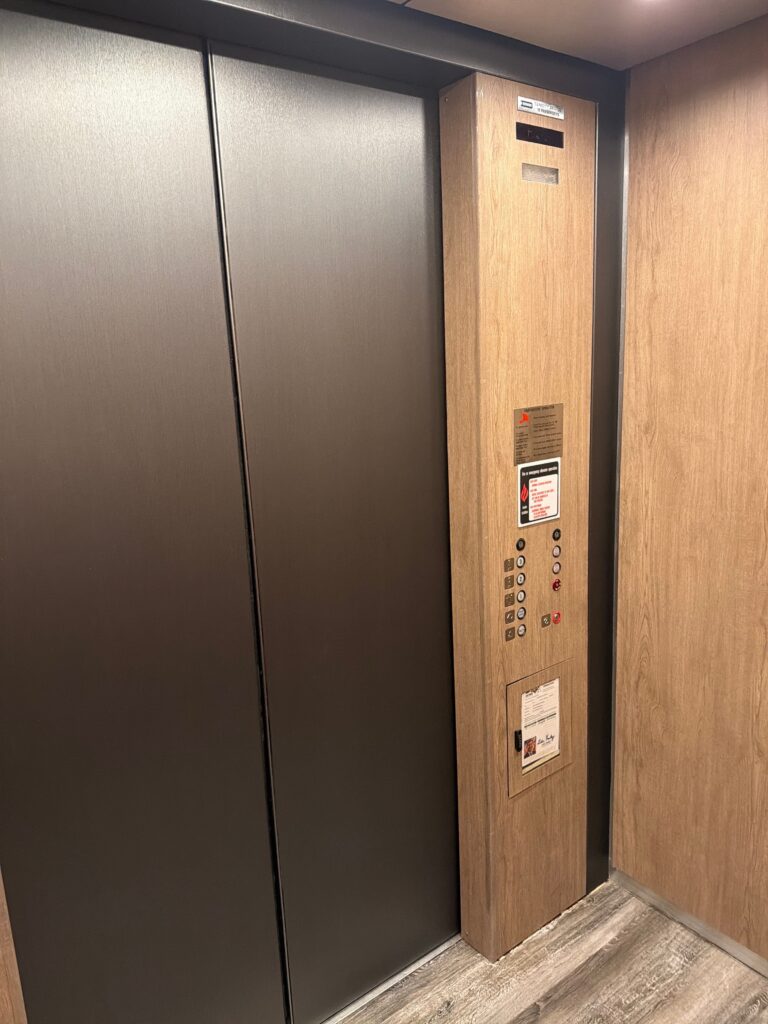
2) Finish direction. We align on textures and tones (clean metals, wood looks, matte solids, stone looks, etc.) and define exactly which surfaces are included.
3) Scheduling + coordination. We coordinate access and timing with your building team—and when needed, we coordinate alongside elevator service providers or a GC.
4) Install + walkthrough. After installation, we walk the cab with you, confirm edges/seams/fit, and leave simple care guidance for housekeeping or maintenance.
FAQs
How much downtime should we expect?
Most elevator cab refinishing is completed in about one day per cab. Landing entrances are typically handled in short windows—usually around 1–2 hours per cab entrance—so buildings can keep traffic moving while work is completed in stages.
How durable is the Elevator Refresh system?
Architectural film is less durable than high-pressure laminate, significantly more durable than paint, and roughly comparable to wood veneer in everyday elevator use. The key advantage is serviceability—if damage happens, it can often be patched or selectively rewrapped instead of forcing a full interior replacement.
What lifespan should we expect?
Elevator Refresh is designed as a cyclical, maintainable surface layer. Typical service life is about 3–5 years in normal commercial use, or 2–3 years in heavy-use elevators. Rather than waiting years for a full rebuild, owners can patch, selectively rewrap worn panels, or re-refresh the full cab on their schedule.
If something gets damaged, do we have to redo the whole cab?
Not usually. Unlike veneer or laminate, film can be more forgiving over time because isolated damage can often be patched or selectively rewrapped. That means one incident doesn’t automatically trigger a full, expensive interior replacement.
What are the phases of the Elevator Refresh approach?
Think of Elevator Refresh as a maintenance cycle: (1) Initial Refresh to get the cab looking “like new,” (2) normal use where minor wear is expected, (3) mid-cycle patch/repair if damage becomes an eyesore, and (4) selective or full re-refresh when cumulative wear shows. Longer-term (often 10–15 years), owners decide whether to keep refreshing or transition to a full new interior when budget and timing align.
What does an initial Elevator Refresh typically cost?
Most initial projects fall in the $5,000–$10,000 per cab range (often around $7k), depending on cab size, surfaces included, and finish selections. We’ll confirm scope from photos and a quick walkthrough so pricing is tied to the exact surfaces you want refreshed.
How much do patch repairs or panel rewraps cost?
Mid-cycle touch-ups are intended to be targeted, not a full redo. Typical service visits are about $500–$1,500 depending on the area and access. Selective rewraps (only high-wear panels) are often $2,500–$5,000, while a full re-refresh is usually similar to the initial refresh range.
How does this compare to a full elevator interior replacement?
A full new interior is commonly in the $25,000–$45,000+ range per cab. Elevator Refresh is built to help owners keep elevators presentable and brand-aligned without committing to that capital expense every time wear shows up—so budget can go to other high-impact upgrades in the property.
How do we clean and maintain the finished surfaces?
We recommend routine cleaning with non-abrasive products and soft cloths to avoid scratching. Scuffs and abrasion are normal over time—Elevator Refresh is designed so you can monitor wear, then patch or selectively rewrap when something becomes visually distracting instead of overreacting early.
20+ Years of Experience
Satisfaction Guaranteed
Professional Approach
Free Consultations
Elevator Refinishing Services
Elevator Customization