
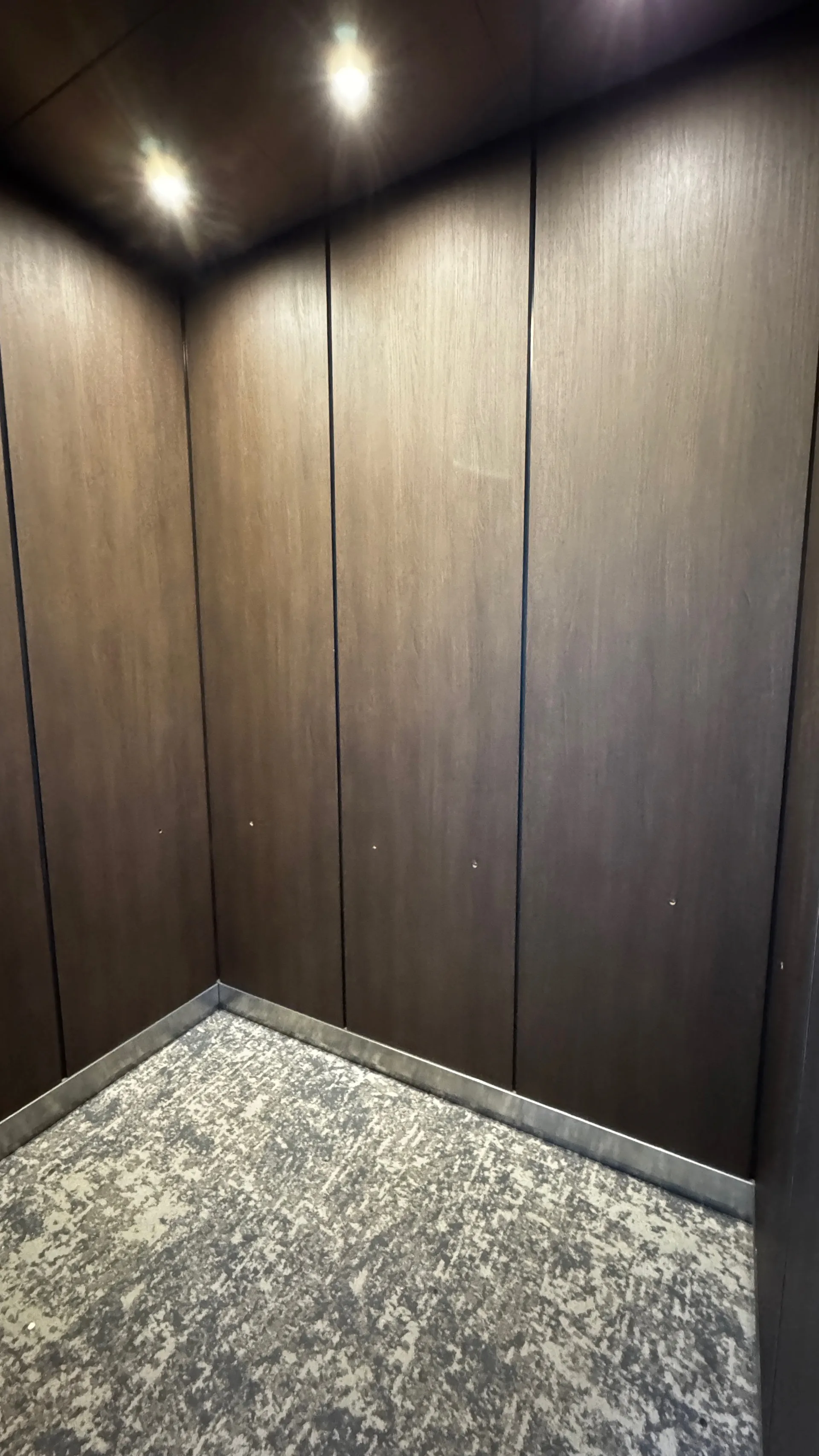
What is commercial elevator resurfacing?
Resurfacing keeps suitable existing panels in place and changes the finish you see. Architectural film is fitted to prepared surfaces to create a wood, stone, metal, solid-color or textured look. It is a practical way to bring older elevator finishes into line with an updated lobby.
The opportunity is greatest when the panels are sound but the appearance no longer suits the property. Keeping those panels can reduce removal, disposal and replacement work. Loose finishes, dents or other damage may need repair first; some surfaces will be better candidates for replacement.
This service updates decorative surfaces. It does not repair elevator machinery or replace controls, safety equipment or damaged structural parts. If your project includes those needs, keep them separate from the finish quote.
Refresh cab interiors, elevator doors and landings
Start with the areas passengers see every day. Cab wall panels, suitable door faces, frames and selected landing surrounds can be reviewed together, so the finish feels connected from the lobby to the cab. You can also focus on only the surfaces that need attention.
Wood-look film can add warmth; metal-look and stone-look finishes offer other ways to complement nearby materials. Fabric, leather-look and solid-color options expand the choices. Review samples in your building's lighting before deciding, rather than choosing from a screen alone.
For busy properties, discuss luggage, deliveries and cleaning routines during the review. The selected film and any additional wall protection should fit how the elevator is actually used.
- Elevator cab wall panels and selected interior details
- Elevator door faces, frames and suitable landing surrounds
- Coordinated finish choices across multiple cabs
Plan resurfacing costs, installation and ongoing care
For initial budgeting, the project team lists typical resurfacing costs of $5,000–$10,000 per cab and around $1,500 per landing opening. These are planning figures, not fixed quotes. Panel condition, surface area, preparation, finish selection and access affect the final price.
Installation is often planned for 1–2 working days per cab, depending on the work involved and site readiness. This is installation time, not the full time from inquiry to completion. A temporary elevator outage may be needed; agree access and scheduling with the property team before work begins.
With suitable material, professional installation and appropriate care, architectural film can provide an attractive finish for years. It is not damage-proof. Follow the selected film manufacturer's cleaning instructions and discuss protection where carts or deliveries repeatedly strike the walls.
To get started, share the property location, cab count, landing-opening count and photos of the surfaces you want to change. Resurface Wraps can review the scope, discuss finishes and develop a project-specific proposal.
Read the resurfacing cost guide · Browse nationwide service coverage · Request a resurfacing quote